Monday, March 22, 2010

Weekly Commodity Market Recap: Cotton


for more analysis like this, please click here.

Cotton prices managed to rebound last week, in spite of mounting bearish evidence hinting at the increased potential for a pullback. Viewed from the bulls’ perspective, cotton’s climb last week came on news of higher unfixed on-call sales and the biggest U.S. cotton exports in nine months. The CFTC’s latest Cotton on Call report indicates unfixed on-call sales are growing at a rapid pace, particularly in the July contract. Total unfixed on-call sales merchants made to textile mills jumped to 68,829 contracts, the highest in two years, supporting higher ICE futures. The July contract rose by 816 contracts to a record 23,159. There are only 11,713 unfixed on-call purchases merchants have made from growers, providing very little in the way of an “offset”. As mills continue to add to their on-call position, it represents more futures that will need to be bought during a smaller window of time, suggesting higher prices are likely.


The bulls also point to the latest report of robust sales and shipments abroad for cotton. Total exports of Upland and Pima cotton reached 312,661 480-lb. bales in the week ending March 11, driven by soaring volume to America’s largest market. Exports destined for Chinese textile mills surged to 152,268 bales, the highest level so far this marketing year. In fact, this weekly volume was almost as much as the U.S. shipped to all other markets combined, reflecting China’s expanding share of total U.S. cotton exports over the last several months. The surging shipments to China in recent weeks echo our observation here of rapid growth in total Chinese cotton imports and suggest cumulative U.S. exports to China this marketing year may climb to the second-highest level ever recorded, something certainly bullish for price.

But from a stronger dollar to higher acreage forecasts for spring plantings, different bearish indicators are looming and likely to offset much of the enthusiasm for higher prices in coming weeks. Greece’s ongoing debt problems led to a weaker euro and stronger dollar last week, limiting gains on commodities. The U.S. Dollar Index finished the week higher at 80.7, rivaling its highest level in 21 months and hindering gains across a variety of commodities.

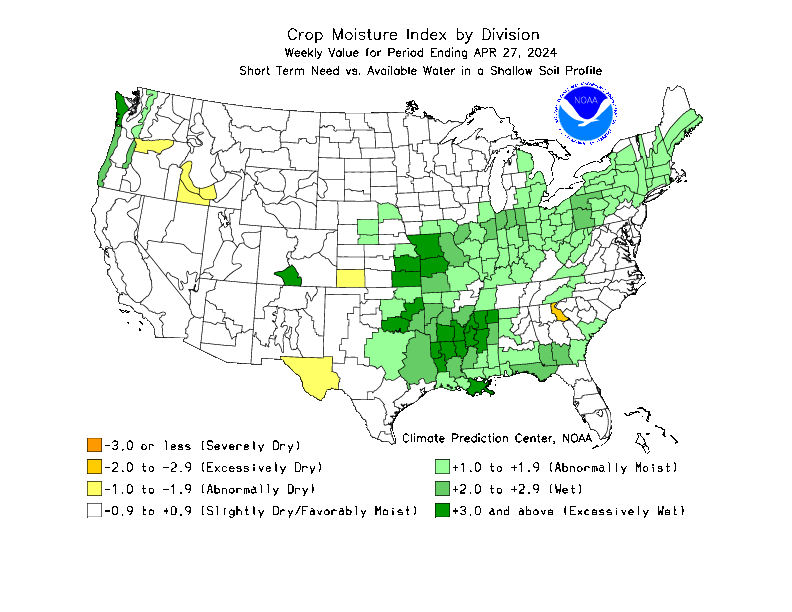
Finally, some price impacts may be coming from excellent topsoil moisture reports across the South and private acreage estimates released last week. One planted acreage report disseminated last week pegged spring U.S. cotton plantings at 10.3 million acres, well up from a year earlier. The market is likely to trend sideways in coming days, in anticipation of the March 31 Prospective Plantings report from the USDA. While the market looks for an increase in cotton acres this spring, the question is how much. Certainly, weather in coming months will impact yields—something difficult to accurately gauge this early in the year—but one early hint at the potential for better-than-average yields is ample topsoil moisture. The latest nationwide map here shows much of the South is wetter than normal, with no cotton acres reported as abnormally dry. This early sign hints that the surge in price over the last year may slow in coming weeks under the weight of a much larger cotton crop.

Monday, March 15, 2010

Weekly Commodity Market Recap: Cotton


for more analysis like this, please click here.

After rocketing ahead in February to its highest point in two years, cotton futures prices retreated last week, falling four of five trading days as the latest WASDE report from the USDA failed to impress and prices responded both to overbought technicals and mounting concerns about the economy. The Nearby finished the week at 80.47 cents per pound, off 1.96 cents from the week before. As we suspected here, the latest USDA forecasts saw global production ease, while U.S. fundamentals were little changed from the previous month, supporting our notion that global drivers would have more of an impact on the market this week than the domestic market. In fact, one could argue that the ‘news’ of a smaller global crop had already been factored into the market, as this information had been widely publicized for some time. Aside from this issue, there were few fundamental surprises in the report to drive price, allowing bearish technicals and outside influences to dictate price for the week.

Weighing negatively on the market this week were several overbought indicators and more worries about the U.S. economy. For example, as prices soared to their two-year high in early March, the RSI signaled the need for a correction. At 77.72, this indicator reached its highest level in 21 months, a few standard deviations away from its long-term 50.0 mean. Economic news last week also weighed on the market. Among other news, weekly U.S. jobless claims for February were higher than expected, and Chinese inflation rose to a sixteen-month high, hinting that tighter monetary policy may stifle rapid consumer demand there later in 2010.

But after four straight losses, prices rebounded on Friday, recouping mid-week losses. Stronger-than-expected February retail sales figures encouraged shorts to cover on Friday, in spite of sagging clothing store sales. A weaker dollar on Friday also fueled speculation of a likely improvement in relatively unimpressive U.S. export sales. Friday’s Commitment of Traders report showed the large specs adding 4,101 longs and 412 shorts to their combined futures and options position in the week ending March 9th, helping spur the improvement in price. Technically, trades formed a ‘bullish engulfing’ pattern on the Japanese candlestick charts. What’s more, Chinese futures prices rebounded Monday, with Nearby ZCE prices reaching 16,295 yuan per ton ($1.08 per pound), close to the ZCE record-high set in early January. This late-week turnaround leaves us believing the market may have found significant near-term support. The longer-term question remains as to how much global cotton acreage will expand this spring, and how much further the bulls will drive the market before bigger crop prospects come into focus this fall.

Monday, March 8, 2010

Weekly Commodity Market Recap: Cotton


for more analysis like this, please click here.

After surging ahead in recent weeks on the outlook for tighter domestic and global fundamentals, cotton prices moderated last week in advance of the USDA’s next WASDE report, easing as technicals turned increasingly overbought. At 84.60 cents per pound, intraday trading last week reached the highest level in two years, following three straight weeks of gains that saw nearby futures soar 17 cents in less than a month. But the market may have overreached—at least for the time being—suggesting prices may consolidate in the short term as attention increasingly turns from tighter old-crop fundamentals to the longer-term outlook for a bigger U.S. and world harvest this autumn.

Wednesday’s WASDE report is likely to show few changes in U.S. old-crop fundamentals, tempering the recent streak of gains in domestic prices. Evidence suggests the U.S. balance sheet only may tighten marginally if at all, while global production is likely to see a more pronounced decline. We have long argued here that India’s harvest size may be overstated, and recent forecasts from China’s NBS here may color the USDA’s projections this week. This suggests global drivers may have more of an impact on the market this week than the domestic market, contrary to the trend reflected over recent months in the graph below.

On balance, futures trading last week was quiet and mostly dull, with traders focusing on the consensus outlook emanating from the International Cotton Association conference in Singapore. After the week’s high was set Monday and the low set Tuesday, trading during the rest of the week remained within that range, with volume well below trend. Presenters’ comments at the ICA meeting were mostly bullish, suggesting that supplies will remain tight through 2010, but likely higher plantings this spring in a number of markets are likely to boost global cotton supplies in 2011, unless crop troubles in China or India cause prices to “explode”. With the global economy on the rebound, increased demand for cotton in the new marketing year is all but certain. As a result, the longer-term outlook for price will be heavily influenced by how much global production rebounds, causing the market now to increasingly turn its attention to pre-plant weather conditions in key markets around the world.

Monday, February 22, 2010

Weekly Commodity Market Recap: Cotton


for more analysis like this, please click here.

ICE U.S. cotton futures rocketed ahead for the second straight week, capping off nine consecutive days of higher closes on the robust outlook for bullish fundamentals in the next marketing year. The nearby soared 440 points for the week to 78.79 by Friday, the highest weekly close since its March 2008 spike. At the 2010 Ag Outlook Forum just outside Washington, DC last week, USDA analysts speculated that bullish fundamentals both in the U.S. and worldwide will persist into the new marketing year. Giving its first peek at a new-crop balance sheet, the USDA looks for global mill demand to outpace production for the fifth straight year, resulting in another decline in ending stocks in 2010/11. This would mean a world stocks-to-use ratio of 41.8%, down from 45.1% estimated for 2009/10 and the lowest since 1994/95, presumably boosting prices next year. Already, the marketing year-to-date average ‘A’ Index price is 75.0 cents per pound, with prices surpassing 83 cents by late February.

Echoing sentiment expressed earlier by others, the USDA believes the U.S. crop is likely to rebound from its lowest level in a quarter century on the outlook for a big jump in plantings and presumed normal yields across the cotton belt. Already, the most year-to-date precipitation in years has fallen around Lubbock here, boosting optimism for higher yields. But higher offtake may absorb the jump in production, leaving domestic ending stocks little changed. This year’s stocks-to-use ratio of 21% is projected to remain about the same in 2010/11, implying prices are likely to remain robust. The USDA projects the marketing year average U.S. price at 64 cents, compared with 62 cents for 2009/10.

While a myopic view of the fundamentals strongly points to even higher prices, we are cautious over the long term, as even higher prices may limit the number of mills able to pay these rates. As most any textile mill will acknowledge, downstream price pressures ensure that the only thing worse than high prices is volatile prices. And this marketing year has been full of both so far, hindering mills’ ability to forward price yarn quotes for remunerative—but still competitive—price points. Since beginning the marketing year at roughly 63 cents per pound, nearby prices are up almost 40% in less than six months. And while market fundamentals may point to continued gains in prices longer term, mills are unlikely to see remunerative prices paid for yarns, impacting both cotton share and viability for many. To avoid this dismal scenario, we encourage you to speak with one of our risk management consultants here to review your exposure to risk and see how we may be able to minimize this exposure for you.

Tuesday, February 16, 2010

Weekly Commodity Market Recap: Cotton


for more analysis like this, please click here.

After tumbling for five straight weeks to the lowest close in three months, nearby cotton futures soared last week, posting its biggest weekly jump in almost seven years. At 74.39 cents per pound, the market finished Friday up 777 points from a week earlier to the highest close since its January 4 peak. The dramatic rebound primarily is attributable to fundamental issues directly impacting the fiber, rather than external factors swaying the tide of most commodities.

In particular, a bullish late-season revision to the USDA’s monthly WASDE report helped set the tone for the week on Tuesday morning. The USDA revised its U.S. export forecast higher by one million bales from January, the largest increase in history at this point in the marketing year. The jump is in response to robust new sales each of the last several weeks and predicated on the belief that exportable supplies from key competitors in Brazil and India may dwindle sooner than expected. In turn, higher anticipated exports in 2009/10 drove projected ending stocks for this marketing year lower by one million bales, to 3.3 million. Forecasts for higher demand and lower ending stocks tightened the anticipated stocks-to-use ratio to 21.4%, the second lowest in a dozen years. These tighter fundamentals drove nearby futures limit-up in Tuesday trading, helping shake off the bearish pall hanging over the market in 2010. Additionally, as this anticipated ratio has gradually tightened each month over most of the marketing year, it has driven futures prices higher. February’s 21.4% stocks-to-use ratio implies further gains in price may be forthcoming in the near term.

Monday, February 8, 2010

Weekly Commodity Market Recap: Cotton


for more analysis like this, please click here.

After again largely ignoring fundamentals internal to the cotton market, cotton futures prices retreated for the fifth straight week, succumbing to the overarching bearish influence of a stronger dollar. The Nearby price on the ICE Futures U.S. exchange plunged 241 points from the previous week to 66.62 cents per pound, a two-month low. This weighed on every subsequent contract month, dragging each lower again, down for every week in 2010. While the week did produce some bullish news for cotton, the dollar remains the key drag on the market.

The bulls took little comfort in robust export sales and further evidence of a smaller Indian crop last week. Net upland sales jumped to a marketing-year high of 519,500 running bales, particularly driven by big volume to China. Weekly shipments also improved, reaching almost 250,000 bales, the second-highest point so far in 2009/10. Exports to mid-tier markets like Mexico, Thailand, and Peru also climbed to marketing-year highs, and market sentiment suggests shipments in coming days are also likely to remain strong.

More voices are adding to the cacophony of suspicion that India’s harvest size is overstated, echoing our long-held argument here. Most recently, the Cotton Association of India pegged the harvest size lower from their earlier forecasts at just 30.2 million bales (170kg), down half a million bales from their previous forecast just over two months ago. We would not be surprised to see forecasts ease even lower in coming months, heartening the bulls’ position.

In spite of these signals of tighter fundamentals last week, the dollar remains the 800-pound gorilla weighing on commodity markets, including cotton. Signs of debt troubles in several European markets are sinking the euro, driving the greenback higher and dragging commodity prices lower. After reaching a fourteen-month high earlier this year, the Reuters/CRB Index is down 35 points to 258.55, a three-month low. Cotton prices are lower in concert with the collapse in the broader index. If the lack of concrete proposals to the European debt concerns from this weekend’s G-7 meeting is any guide, the euro may remain under pressure in coming weeks, implying commodity prices—including cotton prices—also may struggle to post a sustained rebound in the near term.


Looking ahead, our estimates for changes to the forthcoming USDA WASDE forecasts portend tighter domestic markets for the current marketing year:

-U.S. production for 2009/2010: We see the USDA easing its production forecast for the fourth time in five months, down to 12.25 million bales. The volume of ginning and classing of this season's crop here and here remains behind this point last year, hinting that the anticipated harvest size will contract further. In fact, we would not be surprised to see the final crop size even lower—closer to 12.1 million—but we look for the USDA to make only another incremental step in that direction in its February report.

-U.S. exports for 2009/2010: We look for the USDA to revise its export forecast higher again in February, to 11.15 million bales. Already, this moving target has been revised 800,000 bales higher over the last five months, and particularly in light of robust export reports in recent weeks, we anticipate the actual level to be higher than the current 11.0 million-bale forecast.

-Ending stocks for 2009/2010: With a 150,000-bale increase in the harvest size, a 150,000-bale increase in exports, and no presumed change in mill use, ending stocks are likely to ease by 300,000 bales from January's 4.3 million bales to 4.0 million. If so, this would mark the fifth straight month of gradually lower ending stocks. Coupled with higher demand, the lower ending stocks imply a tighter anticipated stocks-to-use ratio for 2009/10, friendly to higher prices. As a result, we look for the market to grapple in coming weeks with the opposing prospects of tighter ending stocks in 2009/10 versus the heavy influence of a stronger dollar.

Monday, February 1, 2010

Weekly Commodity Market Recap: Cotton


for more analysis like this, please click here.

Since trading at an eighteen-month high early this year, nearby cotton prices fell fourteen of the last eighteen trading sessions, down for four straight weeks. At just 69.03 cents per pound, Friday’s close is the lowest in two and a half months. While some fundamental signals last week in the cotton market improved, this latest week’s decline came in response to a strengthening dollar, lower oil prices, and weaker bean and grains prices.

First, demand-side indicators for cotton firmed last week, but did little just yet to stanch the hemorrhaging in price. Weekly export sales discussed here climbed to the highest in eleven months, driven almost entirely by robust purchases by China. Similarly, cumulative Pima cotton exports so far in 2009/10 total more than 495,000 bales, over ten times the volume shipped by this point last year, accounting for much of the recent escalation in price for this species here. Even U.S. mill demand is showing signs of life. Recent months’ annualized cotton usage in domestic mills is averaging higher than the USDA’s latest 3.4 million-bale forecast, helping support the market. But in spite of these signs of improved demand prospects, external influences maintain a heavy influence over cotton, dragging prices lower again last week.

In particular, the resurgent dollar is weighing on a host of commodity prices, including cotton. Since reaching an eighteen-month low in November, the dollar is up six of the last nine weeks, closing Friday at 79.65, its highest weekly close in more than six months. Better-than-expected GDP data in the U.S. last week suggest the U.S. economy is recovering more rapidly than its European or Japanese counterparts, helping spur the greenback higher. A slew of key economic reports this week—including non-farm payroll data—will shed more light on this notion and will direct the dollar further in coming days. Over the last several years, few variables have had as large an impact on cotton prices as the value of the dollar. This trend continues in 2010, as the rebound in the dollar is pulling cotton prices lower, as the graph below shows.

Moving in tandem with weaker cotton prices, crude oil prices are also lower each of the first several weeks of 2010. Since reaching a fourteen-month high early this year, the price of a barrel of crude has fallen over ten dollars to a three-week low of $72.89 amid concerns over Chinese monetary policy and U.S. banking regulations. Analysts expect geopolitical tension, ongoing financial risks and further liquidation of speculative long positions to continue to weigh on oil prices in coming weeks, hindering any rebound in smaller markets for other commodities like cotton.

Likewise, the drag on cotton prices from a stronger dollar and weaker oil prices so far this year is being felt in corn and soybean prices. As prices for all three have eased over the first few weeks of the New Year, we don’t look for this to have a marked decline on the outlook for U.S. plantings this spring. While cotton is lower from a few weeks ago, so too are other crops, and cotton is still trading for a relative premium against these other crops versus this time last year. Accordingly, we maintain our outlook that cotton plantings in the U.S. will rebound in coming months, perhaps upwards of 10%, outpacing the percentage increase in corn or bean plantings. This implies U.S. area may exceed 10 million acres, well up from last year’s 9.15 million acres, the lowest in over a quarter century.

Monday, January 25, 2010

Weekly Commodity Market Recap: Cotton


for more analysis like this, please click here.

Cotton futures retreated for the third straight week last week, dropping more than a cent to the lowest weekly close since mid-November in response to a stronger dollar, weaker alternative crop prices, and credit concerns in China. The 2010 retrenchment in price continued last week, with nearby futures easing lower three of the four trading days during the holiday-shortened week, before settling Friday at 71.07 cents per pound.

One key issue weighing on cotton prices is a resurgent dollar. The greenback rose sharply last week, boosted by a weaker euro, news that China was tightening its monetary and credit policies, and an increase in demand for lower yielding assets. The U.S. Dollar Index finished the week at 78.43, its highest weekly close in five months. In addition to cotton, the stronger dollar also weighed on prices for other ag commodities, dragging cotton lower.

Corn, wheat, and soybean prices all extended their 2010 declines again in the latest week, in concert with lower cotton prices. However, the losses in other key competing crops outpaced the latest weekly decline in cotton prices, implying these other crops dragged cotton prices lower. Since the start of the year, nearby cotton futures are off 6.5%. But wheat, corn, and bean prices are faring even worse, falling between 8-13% over just the first three weeks of the year. These relatively lower prices for other crops support our earlier outlook that cotton may buy back land for spring plantings in a number of markets, particularly the United States.

Finally, the week brought news of efforts in China to slow lending in order to ease concern of a ballooning credit bubble and proactively tamp out inflationary sparks. The country’s regulatory commission instructed banks to slow access to loans in order to tighten loose credit standards. However, Chinese textile and apparel manufacturers already have seen growth in capital investment in the sector slow considerably in recent years. Any further restrictions on new investment may crimp fiber demand longer term, hindering the price outlook.

The decline in U.S. cotton futures prompted another strong week of exports. The latest export sales report pegged net new sales of upland and Pima at 347,000 bales, one of the strongest showings this week. Similarly, weekly exports climbed to 233,000 bales, the second-highest level this marketing year. China remains—by far—the largest buyer of U.S. cotton, but we look for interest from the region to slow as the Chinese New Year approaches in mid-February.

Barring another financial market meltdown or a double-dip recession, our opinion remains that cotton demand will continue to outpace production (even with a presumed increase in plantings). As we discussed last week here, mills are still quite short, and still have on-call contracts that need to be fixed. For these reasons, we believe that while cotton may trade lower in the next few days or even the next few weeks, it will find underlying demand limiting its downward correction witnessed over the first few weeks of the New Year.

Tuesday, January 19, 2010

Weekly Commodity Market Recap: Cotton


for more analysis like this, please click here.

The corrective consolidation in prices extended into the latest week, as weaker cotton fundamentals, plunging Chinese prices, and lower commitments of traders data weighed on U.S. prices. The nearby March contract finished the week down a modest 36 points from the week before, at the lowest close since mid-November.

The week began with an impressive 180-point jump Monday, buoyed by a weaker dollar and sentiment for tighter global ending stocks in Tuesday’s WASDE report from the USDA. However, the optimism for higher prices sagged Tuesday, with prices falling three of the next four days following release of the WASDE report. Tuesday prices gave back most of Monday’s gains, falling 145 points. While USDA projections for U.S. fundamentals closely matched FCStone forecasts, the USDA figures for global supply and demand were more bearish than the market had anticipated. The bearishness carried over into the following day, when Wednesday prices tested the previous week’s low of 72.43, before closing at 73.43, up 64 points. The only other note of bullishness came Thursday following the release of the U.S. export sales report. At 460,726 480-lb. bales of Upland and Pima, sales climbed to a marketing-year high. Similarly, exports jumped in the latest week to 211,891 bales, the biggest volume since early October. Cotton destined for China accounted for the bulk of the surge, with weekly shipments the most in eight months. But in spite of this news, prices eased lower each of the last two days of the week, finishing at 72.08—a seven-week low—sunk by weaker Chinese prices and a stronger dollar.

Even as prices have eased from recent highs on the ICE Futures U.S. exchange, prices on China’s Zhengzhou Commodity Exchange have fallen much faster, weighing on global markets. Since peaking on January 4, the most-traded May contract is off 1,010 yuan per metric ton (6.72 cents per pound) to 15,830 yuan per ton, outpacing the 3.92-cent drop in March futures on the ICE exchange. Market open interest is well off its record peak set two weeks ago as well, falling by more than a third. The plunge both in open interest and prices on the ZCE is pulling market prices on this exchange closer into parity with U.S. futures prices, something we anticipated here.

U.S. futures also are easing lower on signals from the trade. First, reports of lower unfixed call sales from the CFTC weighed on futures prices last week. A significant net reduction took place on the mill side in unfixed on-call positions during last week's price skid, where mills fixed prices on 3,324 lots to reduce unfixed call sales to 49,548 lots. Unfixed holdings on the producer side increased a net 46 lots to 10,524. A second report from the CFTC showed funds and speculators cut cotton futures-options net longs to lowest combined total since week ended Nov. 24, trending in step with the decline in futures prices. Commercials reduced net shorts to 53.2% of open interest, down 10.7 percentage points from eight weeks earlier. Meanwhile, funds and speculators reduced their net longs by a combined 8,587 lots in cotton futures with options during the week ended last Tuesday, according to supplemental data reported by the CFTC Friday. They were net long a combined 131,333 lots, the lowest since the week ended November 24. Trend-following funds trimmed their net longs by 6,255 lots to 41,049, index funds pared theirs by 2,281 lots to 78,055 contracts, and small specs cut theirs by 80 lots to 12,299. The reduction by index funds came on the heels of earlier expectations for a fresh influx of money into the cotton market around the first of the year as a result of rebalancing and has sapped much of the market’s enthusiasm for higher prices.

As a result of the weaker global fundamentals, steep drop in Chinese prices, and unexpected declines in traders’ commitments, futures prices are well off their early-January highs. However, merchants still need to purchase more futures contracts than sell in order to even out their on-call positions, suggesting sentiment has not tilted to the bears just yet. We continue to expect prices to move sideways to higher over the next few weeks, once this correction is fully digested. But should alternative row crops remain at current levels, this divergence in prices will likely prompt a modest increase in U.S. cotton plantings in the spring, which longer term may stem the gains in cotton prices.

Monday, January 11, 2010

Weekly Commodity Market Recap: Cotton


for more analysis like this, please click here.

A barrage of bearish data weighed on cotton prices last week, dragging U.S. and Chinese markets lower into an overdue correction, consolidating and setting the stage before prices resume their gradual march higher this winter. Following a move to new highs early last week, cotton prices on the ICE Futures U.S. tumbled three of the next four days, finishing Friday at 72.44 cents per pound, the lowest level in seven weeks. Several issues together pulled prices lower on the week, including prospects for looser anticipated global fundamentals on Tuesday’s WASDE report, rumors of fund balancing, lower Chinese futures prices, and the Chinese central bank’s raising of interest rates.

First, market sentiment points to higher global cotton production forecasts when the USDA releases its next WASDE report Tuesday morning, boosting anticipated carryover stocks. Here, beneficial rains across the eastern third of Australia over the last half month continue to ease crop concerns from just a few months ago. While the crop there still needs ample moisture during the crucial February fruiting period, ample December and January showers dramatically boosted yield prospects for one of the world’s leading cotton exporters. Similarly, excellent crop conditions across much of the Brazilian cotton belt here are helping improve harvest prospects in the Southern Hemisphere’s largest producer this year. Additionally, the latest data on the robust pace of cotton arrivals in Pakistan here continue to support our long-held view that production forecasts in this market remain too conservative. Together, should these harvest sizes be revised higher as we anticipate, the increase in global supply could temper much of the near-term enthusiasm for continued price gains.

A second issue that weighed on cotton prices last week was rumors of fund rebalancing and a rebound in the dollar. According to the CFTC Commitments of Traders Report, for the week ending January 5th, index funds were net sellers of only 123 contracts, which reduced their net long position to 80,336 contracts. Hedge funds, however, were more aggressive sellers, decreasing their net long position by 4,423 contracts to stand at 41,032. But several market watchers see this as profit-taking by long-only funds, and not an indication that index funds are any less bullish.

The dollar also dragged on many commodities last week, including cotton. In the first full week of trading in the New Year, the U.S. Dollar Index rebounded to 77.655, a three-week high. But Friday’s disappointing jobs report and higher oil prices are likely to temper gains in the greenback in coming days, improving the near-term outlook for cotton.

Lastly, U.S. futures prices were heavily influenced by China’s impact on the market. Plummeting cotton prices on China’s Zhengzhou Commodity Exchange (ZCE) dragged U.S. prices lower. The most-traded May contract on the ZCE fell 570 yuan per ton last week (3.8 cents per pound) on plunging volume and open interest, the biggest weekly drop in months. The drop in futures came as The People's Bank of China Thursday raised the interest rate on its three-month treasury bills for the first time since this summer, stoking fears that Beijing could start tightening monetary policy in the coming months. Market perception is that as the Chinese attempt to gently slow economic growth and head off inflation, consumption of raw materials will slow. This policy shift reverberated across cotton markets around the world, driving prices lower.

While we acknowledge the overdue need for this corrective consolidation in prices, we continue to expect prices to continue to move sideways to higher over the next few weeks, which will likely prompt a modest increase in U.S. cotton plantings in the spring.

Monday, January 4, 2010

Weekly Commodity Market Recap: Cotton


for more analysis like this, please click here.

Cotton enjoyed another week of gains, finishing the year with its highest weekly close since the March 2008 spike. Re-strengthening global demand signals continue to support price, along with soaring trade on China’s Zhengzhou Commodity Exchange (ZCE). A firmer demand picture came into focus this last week, framed by good news in several markets. U.S. export sales of Upland cotton hit a marketing year high of 349,576 bales during the previous week, with much of these sales to China. News of another month of double-digit growth in Pakistani cotton yarn exports here suggested fabric mills across Asia are ramping up production. Likewise, Thai cotton yarn exports detailed here soared at the fastest pace in six years, echoing this sentiment. Downstream, faster growth in retail apparel sales in several markets including Taiwan, Canada, and Poland here confirms the improving prospects for cotton mill demand, as once-wary shoppers begin to return to stores in key markets around the world.

A second key driver impacting prices both in the U.S. and around the world has been the impressive performance of futures trading on China’s ZCE. Prices on the most-trade May contract stand at a record level, followed by soaring volume and open interest. As we discuss here, in just the last week, the May contract soared 835 yuan (5.55 cents per pound) to its new record, as volume more than doubled over the same short period to a record 584,560 contracts. Short supplies, transportation bottlenecks, and faster growth in mill demand for cotton are helping propel Chinese cotton futures prices to these uncharted heights, but the potential for increased cotton plantings this spring may ease price pressure in coming months.

In light of these bullish fundamentals, we look for prices to continue to move sideways to higher over the next few weeks, which will likely prompt a sizable increase in U.S. cotton plantings in the spring. Wednesday morning the market will digest the latest economic outlook from the National Cotton Council, followed by a detailed supply/demand outlook from the International Cotton Advisory Committee and comments on regulatory oversight of the cotton market from CFTC Commissioner Michael Dunn. These reports could have an impact on both trading and price action in coming weeks, and will warrant close attention.

Monday, December 28, 2009

Weekly Commodity Market Recap: Cotton


for more analysis like this, please click here.

The holiday-shortened week saw a flurry of reports from around the globe that worked to tug the cotton market higher and lower, resulting in another week of little net change in cotton prices headed into the final trading week of the year. Over the last month, nearby cotton prices remain constrained to a relatively narrow 478-point trading range, with prices retreating three of four days traded last week closer to the lower end of that range. Even so, at 73.65 cents/lb, last week’s close suggests that cotton prices are poised to finish the year higher eight of the last nine months, with the highest monthly close in more than a year and a half.

Helping drive prices higher, reports last week added to sentiment of improving demand around the world. Evidence here shows cotton imports into Thailand—the second-largest cotton-consuming market in Southeast Asia—soared at the fastest pace in four years, spurred on by a re-strengthening currency and robust demand for cotton yarn exports. Fiber and textile prices in China here climbed to a 13-month high as output in the world’s largest textile producer re-accelerated even further. Similarly, Indian cotton textile production here jumped at a double-digit pace in October—the biggest increase in two and a half years—spurred on by the first year-over-year increase in textile exports in over twelve months. Further downstream, Canadian clothing store sales detailed here rose for the first time in thirteen months in October, supported by improving economic conditions in our neighbor to the north.

But to be sure, not all measures of demand last week were optimistic, offsetting the enthusiasm for higher cotton prices. Here, a streak of successive declines in German textile exports over the last two years is likely to drag textile output in this market to the biggest drop on record in 2009. And annualized mill consumption of cotton in the U.S. sank for the 23rd straight month in November here, falling just below the latest USDA projection for 2009/10, suggesting this forecast may be mildly overstated. U.S. cotton exports also continue to fare poorly in the latest week, and remain well off the pace necessary to reach the latest USDA forecast of 11.0 million bales this marketing year. Adding to the bearish concern, the latest data show Russian cotton yarn and fabric output are both likely to see a record plunge in 2009, with volume falling to the lowest levels years. And finally, while data from MasterCard Advisors' SpendingPulse estimated U.S. holiday sales expanded 3.6%, the report showed lower sales of women’s and specialty apparel, echoing our concerns for the crucial holiday shopping season here.

These offsetting signals add to the market’s hesitation and lack of clear direction in recent weeks. And after climbing each of the last three weeks, the dollar wavered last week, further clouding the outlook. We continue to think price may be near the bottom of its recent consolidation range, and may trade modestly higher into the New Year. But longer term, we look for U.S. spring cotton plantings to jump at a double-digit rate from last spring’s low, suggesting increased supplies will help counter the global trend of improving demand prospects in many markets, moderating the long-term uptrend in price.

Monday, December 21, 2009

Weekly Commodity Market Recap: Cotton


for more analysis like this, please click here.

As the holidays approach, the U.S. cotton market remains relatively quiet, locked in a narrow 240-point range over the last month, with little fundamental news of substance to steer price higher or lower in recent days. In the bears’ camp, most commodities were on the defensive last week as the dollar index rallied from its lowest level since August 2008 to a three-month high. Corn, wheat, and soybean each edged lower last week as the greenback rose for the third straight week. Also, a Memphis-based forecasting group released one of the first crop outlooks for 2010, calling for domestic cotton acres to expand about 10% from this year’s quarter-century low to 10.0 million acres. And while the longer-term outlook for the global textile complex continues to improve in the wake of last year’s economic contagion, several markets around the world still saw output fall again in the latest month—albeit at slower rates—postponing any premature calls of the end of the global textile recession.

The bulls take comfort from a few bits of news last week, offsetting the bears’ momentum and keeping cotton prices range-bound. Retail apparel markets in several countries continue to percolate, suggesting better, frothier days lie ahead. And news from China indicates that output in most sectors of China’s textile behemoth continues to re-accelerate, shaking off the lingering effects of last year’s slowdown. Shorter term, we are wary of choppy trading on holiday-induced lower volumes as the market trudges through this latest consolidation pattern. We remain cautiously bullish on price in the medium term, but believe the outlook for increased global plantings longer term will suppress the market’s exuberance for higher prices into the spring.